


WELCOME TO ITALY!
Imagine arriving in Italy and instantly feeling like a local...
Bulgari's new site makes that dream come true, guiding you through every step of settling in.
Navigate each section and pinpoint the information that matters most to you.
You can be sure that the HR team will be available to support you during your stay!

MUST HAVE - 6 KEY ACTIONS TO TAKE IMMEDIATELY

TAX CODE – CODICE FISCALE
TAX CODE – CODICE FISCALE
It is the key to your life in Italy! It's the first document you absolutely need and it's surprisingly easy to obtain.
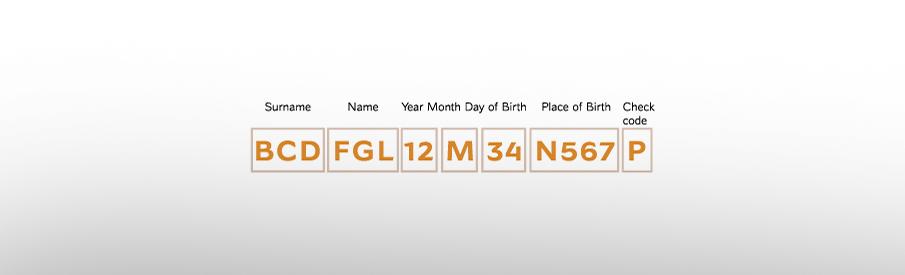
What is the "Codice Fiscale"?
The Codice Fiscale is the code (16 characters in total) on the basis of your first name, surname, date and place of birth. It is used by the Public Administration to identify the citizens residing in Italy and is issued by the Revenue Agency.
Why do you need the “Codice Fiscale”?
You will need it any time you manage data or requests with a fiscal impact, such as for example for:
signing an employment contract
opening a bank/postal account
signing a lease/purchase contract for a flat or a car
signing contracts with utility companies (gas, electricity, water, internet, phones, mobile phones, etc.)
getting tax refund or tax relief
checking your fiscal and social security situation
How can you get the "Codice Fiscale"?
Unfortunately, it’s not possible to request your Codice Fiscale online.
If you’re an EU citizen, you’re lucky! It makes the process easier. All you need to do is submitting a request (in person) at any office of the Italian Revenue Agency. Make sure you bring a valid ID or passport, and you should be able to pick up your Codice Fiscale certificate on the same day. If you’re outside Italy, you should be able to submit your request at any Italian consular office or Italian Embassy in your current EU country of residence.
If you are an Extra UE citizen, you have to submit your request at:
The Single desk for immigration (Sportelli Unici per l’immigrazione). This government agency handles requests for the tax identification number (Codice fiscale) to people who apply for entry into the country for employment purposes or for reunification with family.
Police headquarters (called “Questura”). The Police headquarters assign tax identification numbers to foreign nationals who require either the issuance or the renewal of a residence permit.
What documents do you need to request the Codice Fiscale?
If you are a EU citizen you just need a valid identification document. You can also manage the request for your children if they are younger than 18.
If you are a non-Eu citizen, you need alternatively:
a valid passport with visa (if required), or any other identity document accepted by the Italian government.
a identity certificate issued by the Italian diplomatic or consular authorities from your original country (with photo).
a valid residence permit (permesso di soggiorno)
an ID card issued by the municipality of residence in Italy.
The more you speed to get this document the more your life in Italy will be smooth!

CHANGE OF RESIDENCE
CHANGE OF RESIDENCE

Why do you need to change your residence?
Moving your residence to Italy can offer several benefits, including:
Tax benefits: Italy offers various tax incentives for new residents, such as preferential tax regimes for high-net-worth individuals but also for Italians who come back to Italy. These regimes can significantly reduce your tax burden on income earned outside of Italy (see “Taxation tips” section).
Healthcare: As a resident, you'll have access to the Italian National Health Service (Servizio Sanitario Nazionale or SSN), providing comprehensive healthcare coverage.
Education: Your children can attend Italian public schools and universities.
Real estate: Owning property in Italy can be an attractive investment, and there are often tax advantages associated with primary residences.
Cultural enrichment: Living in Italy provides the opportunity to immerse yourself in Italian culture, learn the language, and enjoy the country's rich history, art, and cuisine.
EU citizenship: After a certain period of legal residency, you may be eligible for Italian citizenship, which grants you the rights and privileges of an EU citizen.
If you have any doubts or need any support, ask your HR contact!
What documents do you need to get the residence permit?
EU Citizens:
Valid ID card or passport.
Proof of employment or for student registration in a school or university.
Proof of accommodation (rental agreement or property ownership).
Non-EU Citizens:
In addition to the above requirements, you need:
Visa Requirement.
Residency Permit ("Permesso di Soggiorno"): The type of permit depends on the reason for your stay (work, study, family reunification, etc.).
For any further details you can consult the following link:
https://www.comune.roma.it/web/it/servizi.page?tem=anagrafe_e_servizi_civici
What might it happen next?
After having registered the change of address, local authorities (vigili) might come to your house and inspect the new housing arrangements.
Do not worry about it!
You just have to show a valid form of identification and documentation that shows legitimate occupancy (i.e. rental contract)

HEALTHCARD - TESSERA SANITARIA
HEALTHCARD - TESSERA SANITARIA

What is the “Tessera Sanitaria"?
To access the Italian National Healthcare Service you must hold a valid Tessera Sanitaria (Italian Health Insurance Card) or the equivalent from another EU country (the EHIC card – European Health Insurance Card). It is mandatory for any public medical services but it is not required for private doctors.
The health card is free and is valid for 6 years or as long as you have permission to stay in Italy.
Why do you need the “Tessera Sanitaria”?
You can:
Choose your public Primary Care Physician or a Pediatrician for your children (<14 y.o.)
Get vaccinations
See a specialist doctor in a public hospital (e.g. a gynecologist, a cardiologist, etc)
Have lab tests and diagnostics in a public structure (ultrasound, X-ray, etc)
Get prescriptions for medications
Be admitted to a public hospital
See a dentist at a public hospital
How can you get the “Tessera Sanitaria”?
You can apply for Tessera Sanitaria at your Sanitary agency called Azienda Sanitaria Locale (usually named ASL by Italians), providing the following documents:
Passport
Your tax code (Codice Fiscale)
Residence permit (or proof you have requested one, such as the receipt)
Self-certification of address (instead of providing official certificates, individuals can submit a signed declaration, called "Autocertificazione", affirming personal information under their own responsibility, with the awareness that false declarations are subject to legal penalties.
You can find more information in the following link:

ELECTRONIC IDENTITY CARD (CIE)
ELECTRONIC IDENTITY CARD (CIE)

What is the Italian ID card (called “CIE” -Carta Identità Elettronica)?
The Electronic Identity Card (CIE) is the identity document of Italian citizens issued by the Ministry of the Interior. Thanks to highly advanced security and anti-counterfeiting elements, it grants your identity verification.
Why do you need the «CIE», why is it useful?
Identification: It serves as a primary form of identification within Italy and in many other countries.
Online Authentication: It allows secure online authentication and access to online services offered by the Italian government and other participating organizations. This is possible via the embedded microchip.
Travel Document: the CIE is a travel document valid in all countries belonging to the European Union and in those with which the Italian State has signed specific agreements, hereby facilitating border crossings via air, rail, and other transportation methods.
Digital Signature: the CIE allows users to sign digital documents through an advanced electronic signature (FEA). This feature is valid both for interactions with Public Administration and for agreements between private individuals.
Proof of Residency: it can be used to prove residency in Italy.
Can you obtain the CIE if you are not residing in Italy?
No! the residing in Italy is mandatory
How long is your CIE valid?
3 years for minors under the age of 3
5 years for minors between the ages of 3 and 18
10 years for adults
How can you request/reniew the “CIE” (Carta Identità Elettronica)”?
Some municipalities provide the e-environment for the online booking. With the “Prenotazioni CIE” system, if you have residence or domicile in one of these municipalities, you can schedule an appointment to request the electronic ID card at this link: https://www.prenotazionicie.interno.gov.it
Alternatively, it is possible to contact the municipality and book an appointment by phone or via internet.
Once the request procedure has been completed, the Italian Printing Works and State Mint will send the new CIE directly to the address you indicated within 6 working days.

SPID - DIGITAL IDENTITY
SPID - DIGITAL IDENTITY

What is the SPID and why do you need it?
SPID is the primary way to access online services offered by the Italian government and public administrations. This includes services related to healthcare, taxes, social security, education, and more:
Simplified Bureaucracy: it simplifies interactions with government agencies by allowing citizens to handle administrative tasks online, reducing the need for in-person visits and paperwork.
Secure Identification: SPID provides a secure and reliable way to prove one's identity online, protecting personal data and preventing identity theft.
Unified System: SPID provides a single digital identity for accessing multiple services, eliminating the need to remember different usernames and passwords for each public platform.
EU Recognition: SPID is recognized at the European level, facilitating access to online services in other EU countries.
What documents do you need?
a personal e-mail address (do not use work addresses or other e-mails to which one day you may no longer have access).
the phone number of the mobile phone you normally use.
a valid Italian identity document.
How can you request the SPID?
Choose a Provider: select an authorized SPID identity provider (Identity Provider or IdP). Some common providers include Poste, Aruba, InfoCert, Namirial, Sielte, Tim o Lepida.
The following link provides you with all comprehensive list of providers: https://www.spid.gov.it/richiedi-spid#tabella-idpRegister on the chosen provider's website or app. You'll typically need to provide your personal information, upload a copy of your identity document.
Identity Verification: it depends on the provider and can be:
a. In-person verification: Visiting the physical office of the provider (e.g., a post office for PosteID).
b. Online verification: Using a webcam for a video call with an operator.
c. Using a Carta Nazionale dei Servizi (CNS) or a Tessera Sanitaria with a chip. Electronic Identity Card (CIE).Activation: Once your identity is verified, you will receive your SPID credentials (username and password or other authentication methods). Please note that you will not receive any physical card.
Is SPID free of charge?
Yes, obtaining SPID is generally free for citizens. However, some providers can request a fee for submitting the request.
Simple, safe and fast!
You can use SPID from any device: computer, tablet and smartphone every time you find the “Enter with SPID” button on a site or service app.

BANK ACCOUNT
BANK ACCOUNT
An Italian bank account: your key for unlocking financial ease and enjoying the dolce vita without the worry of hidden fees or complicated transactions

What documents do you need?
Valid passport or national ID card
Italian tax code (codice fiscale) - essential!
Residence permit (permesso di soggiorno)
Proof of address (e.g., utility bill, rental contract)
Employment contract or letter from employer
Which type of bank account can you choose?
Traditional Banks: (e.g., Intesa Sanpaolo, UniCredit, Banco BPM,…) they offer a full range of services and physical branches.
Online Banks (Neo-Banks): (e.g. N26, Revolut, Wise,…): they often have lower fees and easier online application processes.
What key elements do you have to pay attention to?
Fees: Monthly fees, transaction fees, ATM and international transfer fees.
Accessibility: Branch locations, ATM availability, online banking features.
Language Support: Availability of English-speaking staff or online banking in English.
Start the Process Early! Don't wait until the last minute to open a bank account. Be patient and persistent, and don't be afraid to ask for help to your HR reference.
NICE TO HAVE / NICE TO KNOW

DRIVING LICENSE
DRIVING LICENSE
In Italy, your driving license is just the beginning of a beautiful, unpredictable journey on four wheels. You can navigate picturesque towns and encounter the warmth and hospitality of the Italian people.

If you are a EU/EEA citizen
If your driving license is issued by an EU or EEA Country, it is generally recognized in Italy and you can usually drive in Italy with your primary license as long as it is valid.
However, you may choose to convert your license into an Italian one. This might be useful for administrative purposes or if your primary license is nearing its expiration date.
If you are a non-EU citizen
You can usually drive in Italy using your foreign driving license for a period of one year from the date you establish residency in Italy.
An International Driving Permit (IDP), along with your original driving license, is usually required if you plan to drive in Italy within the first year of residency. The IDP is a translation of your driving license and must be accompanied by the primary license.
Exchanging for an Italian Driving License: After one year of residency, you will typically need to convert your foreign driving license into an Italian one. Some Countries have mutual agreements with Italy, allowing a direct exchange of licenses. If no agreement exists, you will likely need to pass both a theory and a practical driving test in Italy.
Where can you get more Information?
Motorizzazione Civile (Ministry of Infrastructure and Transport): This is the official government agency responsible for driving licenses and vehicle registration (link: https://www.motorizzazioneroma.eu/)
ACI (Automobile Club d'Italia): The Italian Automobile Club offers assistance and information to drivers (link: https://www.aci.it/)
Local Driving Schools (Scuola Guida): They can provide guidance on conversion of licenses or on driving tests.
Main driving rules in Italy
Maybe you are wondering: how dangerous is it to drive in Italy? Is it safe to drive a car in Italy and are the stories about crazy Italian drivers true?
Here you are with some practical tips for driving in Italy, avoiding fines and without losing your zen:
Keep to the right and overtake to the left
Low beam headlights must be used on two-way motorways
The use of seatbelts is compulsory, also on backseats, and car seats are mandatory for small children up to 150 cm (approximately 4 feet 11 inches) in height.
The alcohol limit for driving is 0.5 grams per liter of blood (if a driver is found to be above the limit, he is subject to fines, license suspension, and even imprisonment, depending on the level of alcohol in their blood).
You cannot drive in a Zona Traffico Limitato (ZTL) without a special permit.
When passing through towns and villages, the horn may only be used for an emergency - keep that road rage in check!
Pedestrians, trams and trains have the right of way
What are Italian “Autostrade”?
Autostrade are the Italian highways, they are no for free! As you enter them, you will find a tall booth dispensing tickets with your point of entry (automated machine) and, when exiting at your destination, you will use the machine provided to pay the fee. Usually, both cards and cash are accepted.
How can you speed up the fee payment at toll booth?
You can use the TELEPASS, an electronic small device you keep in your car that communicates with toll gates and allows you to pay fees automatically without stopping at the toll booth.
Telepass users can use dedicated lanes at toll booths, which are usually much faster than the regular lanes.
How Does it Work?
You subscribe to “Telepass” service, and you will receive a small device to attach to your windshield.
When you approach a toll booth, look for the lanes marked 'Telepass'. Slow down, but you don't need to stop completely."
The device beeps, the gate opens automatically, and the toll is charged directly to your bank account.
How can you get Telepass?
You can subscribe to Telepass online though the official website (https://www.telepass.com/).
You can apply in person at Telepass Stores/Centers ("Punto Blu"). You can find the centers locations on the Telepass website.
Through your bank account: some Italian banks offer Telepass as part of their services. Check with your bank if they have this option.
Italian Autostrade usually have 2, 3 o 4 lanes and are open to cars, vans and trucks (no mopeds and slow vehicles).
The speed limit on Italian Autostrade is generally set at 130Km/h.
Restrictions for Italian cities historical center (ZTL)
Many Italian cities have ZTLs (Zona Traffico Limitato), or Limited Traffic Zones, in their historical centers. These zones restrict vehicle access to reduce traffic and pollution in those areas. Generally, only residents with permits, public transportation, and emergency vehicles are allowed to enter.
If you are planning to drive in the city, check where the ZTL areas begin and whether you are allowed to enter those areas. Usually, cameras will automatically fine your car if you enter without authorization.
And if you want to drive in Rome…
Good luck! And ask for the unofficial driving rules to HR privately!

ITALIAN TAXATION SYSTEM
ITALIAN TAXATION SYSTEM
“Who gains more pays more!”
Welcome to the Italian taxation system

If you spend more than 183 days in a calendar year (January to December) in Italy, even non-continuously, you are considered as an Italian tax resident. This means that you must declare and pay taxes in Italy on all your Italian income but also on the foreign one.
What taxes do you have to pay?
1) Taxation of income from Employment: the amount of taxes and contributions to be paid is calculated by the Company on a monthly basis and withheld by the Employer on the pay slip.
IRPEF: Personal Income Tax. This is the main taxation applied on income from Employment.
Regional additional taxation: this is an additional tax to pay to the Region in which you live, with rates variable according to the Region of residence.
Municipal additional taxation: this is an additional tax to pay to the municipality in which you live, with rates variable according to the municipality of residence.
Contributions to INPS (National Social Security Institute): these are compulsory contributions that you have to pay for your future pension and to get financial coverage in case of sickness.
How do you have to declare your income?
You must submit your annual tax return (called Modello 730) to the Revenues Agency (Agenzia delle Entrate) with reference to income of the year preceding the one the declaration is filled in. This form must be completed between April and September, provided you have income additional to your Italian salary (such as foreign salaries, rents, real estate income, income from land etc.) and/or you have certain types of expenses to deduct (such as medical expenses, public transport pass, public and private nursery fees, subscriptions costs for sports activities, etc.).
After submitting your declaration, you may be entitled to:
a refund, that you will receive directly on your pay slip;
a tax adjustment that will be withheld from your pay slip.
How can you submit your declaration (Modello 730)?
you can complete by yourself the pre-filled form online on the website: www.agenziaentrate.gov.it
you can contact a CAF – Tax Assistance Centre (e.g. Confagricoltura, Corso Vittorio Emanuele II, 87 - Roma),
you can contact an Accountant
The first option is free, the second one is free if you contact the CAF Centre in agreement with the company (ask the contact references to your HR).
2) IMU (Municipal Property Tax): is a municipal property tax in Italy. It's paid on the ownership of buildings (including houses, offices and shops) and land.
Who pays it? Anyone who owns property in Italy, whether they are residents or non-residents, may have to pay IMU.
Exemptions
The primary residence is generally exempt from IMU, BUT only if it's NOT a luxury property (i.e properties with cadastral categories A/1, A/8, or A/9). In addition there might be other exemptions or reductions depending on the municipality, such as for agricultural land owned by farmers
When is it paid? There are two instalments (one in June and one in December).
How can you pay it? Through the F24 form (a standardized form used in Italy to pay a wide range of taxes, duties, contributions, and other payments to the Italian government, regional authorities, and other public bodies)
You can pay:
online via "F24WEB Service", an online service provided by the Italian Revenue Agency ("Agenzia delle Entrate") that allows taxpayers to fill out and submit F24 forms directly through the agency's website;
by downloading the software made available by the “Agenzia delle Entrate”;
at any Bank or Post Office;
through the Home Banking service of your bank or Poste Italiane.
Be careful! Depending on your municipality, a payment notice may not be issued until the payment due date has passed.
Ensure timely payment to avoid potential penalties!
3) TARI (Waste Management Tax): this is the tax that covers the municipal waste collection and disposal services.
Who pays it? Everyone owning or using a property (even if it is rented) on a continuous basis. It also applies to main residence, offices, shops, etc.
When is it paid? This varies from municipality to municipality (generally it is paid in 2 or 4 installments between May and December)
How can you pay it? The municipality sends a payment notice to your home with payment instructions, that is
The total amount to be paid
The due date
Prefilled forms to be used for payment
Where can you pay for it?
online, via the municipality’s portal or PagoPa (a digital payments platform in Italy designed to simplify and standardize payments to the Public Administration).
at the bank or at the post office
at tobacconists enabled with PagoPA
Via home banking (F24)
4) Wealth Tax on foreign properties and investments owned outside of Italy
The wealth tax applies to individuals who are tax residents in Italy, regardless of their nationality. Italian residents must pay property taxes on foreign real estate (IVIE) and on financial assets (IVAFE):
IVIE (Imposta sul Valore degli Immobili all'Estero): tax on the value of real estate properties located abroad (1.06% on the value of real estate, or 0.4% for the main residence owned abroad)
IVAFE (Imposta sul Valore delle Attività Finanziarie all'Estero): tax on the value of financial assets held abroad, such as stocks, bonds, and other investments (0.2% on the value).
Taxpayers must declare their foreign assets on their Italian tax return ("Modello 730). Italy has double taxation treaties with many countries, which may prevent double taxation on the same assets.
In addition, all foreign income must be declared and taxed in Italy:
foreign compensation, foreign pensions and foreign rental are subject to Irpef (progressive rates 23%, 35% or 43% + additional Regional and Municipal income taxes).
dividends or interest are subject to a substitute tax at 26%, without the possibility of deducting foreign taxes.
Tax Regime for repatriated workers
"The Inpatriates Regime” offers a tax benefit for European workers relocating to Italy from abroad, representing a significant opportunity for tax savings for qualified professionals who choose to transfer their residency to Italy.
What are the advantages?
The benefit stipulates that only 50% of the taxable income is subject to IRPEF taxation, and the percentage can decrease further to 40% for employees with dependent children.
The benefit lasts for 5 consecutive years and applies to income up to 600,000 euros per year.
What conditions must be met to be eligible for this regime?
Have resided outside of Italy for at least 3 years (requirement extendable by the Italian State up to a maximum of 7 years under certain circumstances);
Transfer tax residency to Italy and commit to maintain it for at least 4 years;
Conduct the primary work activity within Italian territory;
Possess a high professional qualification, as defined by European legislation

PUBLIC HEALTHCARE – SERVIZIO SANITARIO NAZIONALE (SSN)
PUBLIC HEALTHCARE – SERVIZIO SANITARIO NAZIONALE (SSN)
If you are a foreign citizen with regular residence permit you are fully entitled to have the same rights and treatment as any Italian citizen!

How does Healthcare work in Italy?
Italy has a public healthcare. Our Country provides a mixed public-private healthcare system, so you can choose between the two at any time, as long as you are eligible.
The health services are usually free-of-charge or subject to a symbolic cost and are provided by the Servizio Sanitario Nazionale (SSN), the Italian National Health Service. SSN’s enrollment is mandatory if you work in Italy.
The Public healthcare is provided through regional health branches called ASL (Azienda Sanitaria Locale – Local Health Authority) and Public Hospitals which manage a set of public clinics and medical services (e.g. vaccination centers, public walk-in clinics, labs for analysis and X-rays, etc.).
link: https://www.salute.gov.it/
What does public healthcare cover?
Italy’s Healthcare covers most medical procedures:
Primary Care: Doctor visits, general check-ups, basic medical advice, and referrals to public specialists.
Dental care is free in emergency cases and for all children up to 16 years of age.
Prescription medications’ cost is partially or fully covered, depending on the type of medicine and your level of income.
Hospital Care: Inpatient services (hospital stays), surgeries, emergency care, diagnostic tests (X-rays, MRIs, blood tests), and maternity care.
Preventive Care: Vaccinations, screenings (e.g., cancer screenings), and health education programs.
Maternity and Newborn Care: Prenatal care, childbirth services, and postnatal care for both mother and child.
Mental Healthcare: Access to mental health professionals, therapy, and psychiatric service.
How much do you have to pay?
You don’t pay to get a visit from your family’s doctor or pediatrician. Treatments that require surgery or hospitalization in public hospitals are also free of charge. However, you are asked to co-pay some prescribed procedures and specialist visits. This co-payment varies according to the type of medical service.
Suggestion: as you may deduct many medical expenses for tax purposes, always keep the receipts even if you are not sure they are deductible!
How can you sign-up for Italy’s Public Healthcare System?
You have to sign-up the SSN the Azienda Sanitaria Locale (ASL), your local health Unit. You have to provide the following documents:
Your residency document or the receipt for your residency application;
Passport;
Tax code (Codice Fiscale);
Residence permit;
Evidence of your dependants, that is family members who are economically dependant on you (i.e. a translated marriage certificate for your spouse or your child’s birth certificate for your children child).
What can you do after the registration to SSN?
Still at your ASL office, you can:
Obtain a Health Card "Tessera Sanitaria"
Choose a public primary care physician (medico di base)
Choose a pediatrician for your children, if applicable
If you have any medical emergencies, what do you have to do?
you should call 118. They will send an ambulance to your location. You can also go to the nearest hospital emergency room (Pronto Soccorso).
If you have less urgent medical needs (for example if you need medical advice or a prescription), you can contact the "Guardia Medica", which is a service for out-of-hours medical assistance.
For minor illnesses or injuries, the "Guardia Medica" can provide a more appropriate level of care than a busy emergency room, where resources are focused on critical cases.
Furthermore, the "Guardia Medica" typically has shorter waiting times than the "Pronto Soccorso," which can be very busy, especially during peak hours.
Both the services are usually free.

NATIONAL HOLIDAYS
NATIONAL HOLIDAYS
Here are some special days to enjoy the Italian 'Dolce Vita' in a more immersive way!

New Year (1st January)
Epiphany (6th January)
Easter day
Easter Monday (Monday after Easter Day)
Liberation Day (25th April)
Labor Day (1st May)
Republic Day (2nd June)
Ferragosto (15th August)
All Saints (1st November)
Immaculate Conception (8th December)
Christmas (25th December)
Santo Stefano (26th December)

EMERGENCY NUMBERS
EMERGENCY NUMBERS

In case of an emergency, who should you contact?
The 112 operator will forward the call to the relevant service depending on the type of emergency.
You can call Guardia medica H 24: 116117
The Guardia Medica (also known as Servizio di Continuità Assistenziale) is an on-call medical service that provides urgent, non-emergency medical care when a family doctor is unavailable, especially during nights, weekends, and holidays. They can provide consultations, home visits, prescribe medications, issue medical certificates (for a maximum of three days), and refer patients to a hospital if needed.
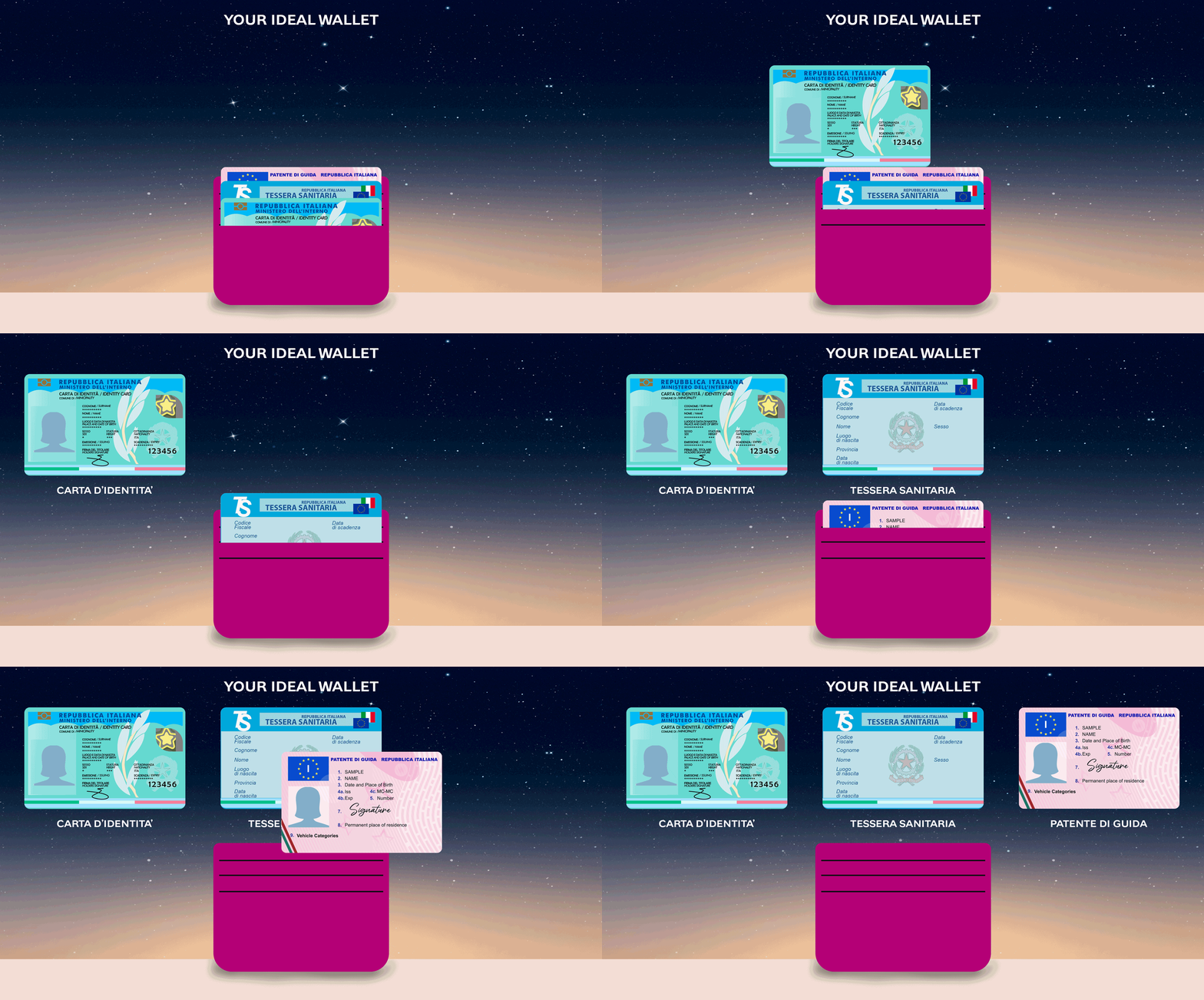
CLICK HERE AND DISCOVER YOUR IDEAL WALLET
Where is BVLGARI in Italy?
Explore the interactive map to discover Bulgari’s sites in Italy. Click on the individual markers to view images and learn more about our locations